
Personal Learning Assistant: Ongoing professional development in day-to-day work.

In modern organisations, knowledge becomes outdated faster than traditional training formats can keep up with. Training courses are often time-consuming, too general and far removed from the real-world work context. The Personal Learning Assistant embeds learning directly into day-to-day work – drawing on the organisation’s digital memory.

Book a Demo now

The challengeLearning when it’s too late is of no use.

New tools, changing processes, rising quality standards and increasing specialisation make continuous learning essential for high performance. The result of traditional training: growing skills gaps, lost productivity and quality issues.

of the learning takes place informally in the workplace – not in training rooms

are needed for employees to be able to apply a new skill effectively

of companies report existing or anticipated skills gaps
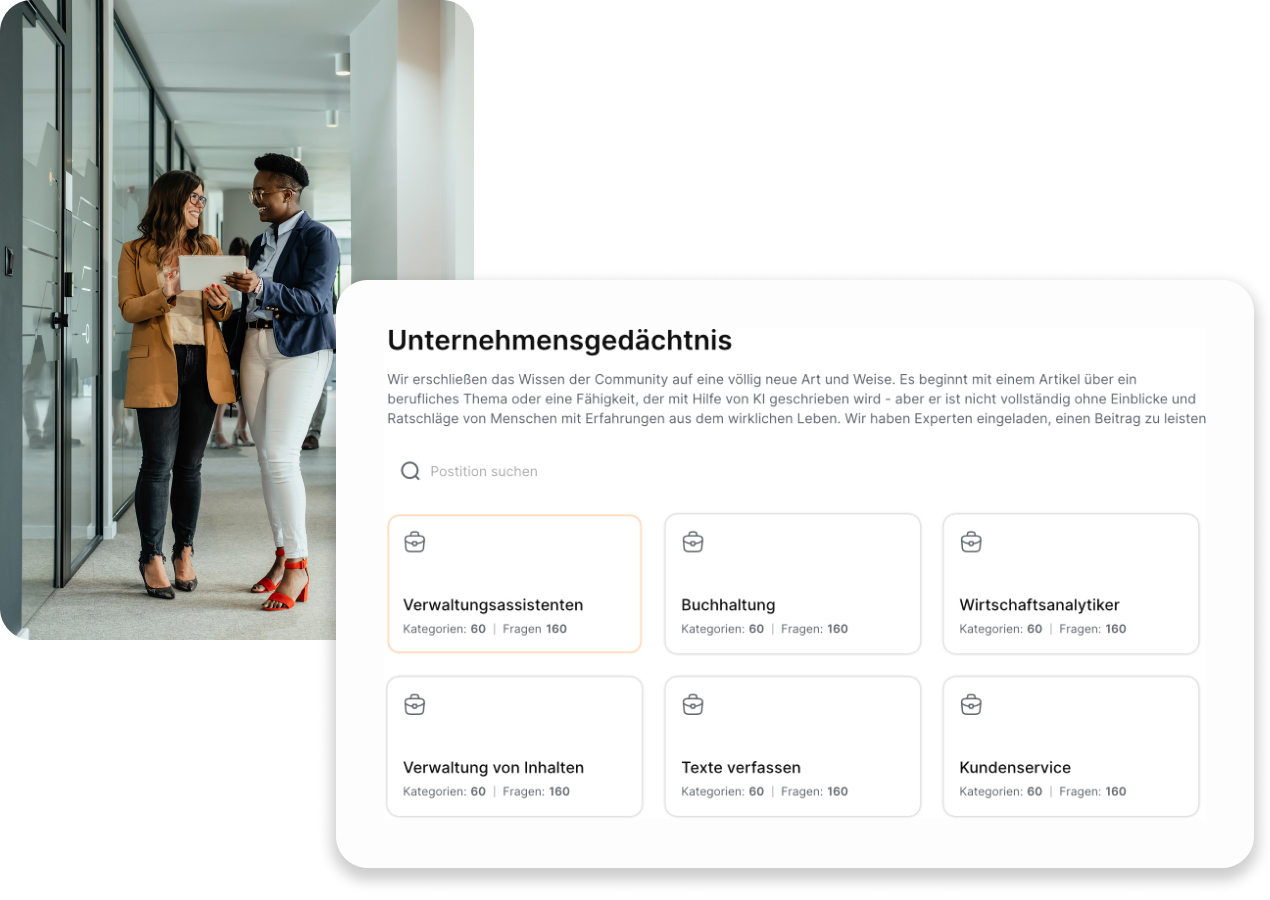
How the Personal Learning Assistant helps

  • Corporate memory as a foundation for learning: Workflows, decisions, problem-solving approaches and best practices are continuously incorporated into the knowledge base. This results in a constantly up-to-date representation of actual working practices.
  • Digital twins as a competence model: Digital knowledge twins are created for each role, incorporating the necessary skills, typical challenges, solution strategies and quality standards drawn from real-world practice. The Personal Learning Assistant tailors individual learning pathways precisely to the actual requirements of each role.
  • Learning on the job: When new tasks, process changes or errors arise, the Assistant automatically identifies the need for learning and draws on the relevant practical knowledge. Not in an abstract way – but in a practical, hands-on manner, exactly when it is needed.

Features at a glanceLearning that grows alongside work

The Personal Learning Assistant links the digital corporate memory with role-based knowledge twins. Learning becomes a natural part of productive work – continuous, experience-based and scalable.

1. Organisational memory as the foundation for learning

Workflows, decisions, problem-solving approaches and operational best practices are continuously incorporated into the knowledge base providing a constantly up-to-date reflection of actual working practices.

2. Role-based knowledge twin

A digital competency model is developed for each role, incorporating the necessary process knowledge, typical challenges, solution strategies and quality standards drawn from real-world experience.

3. Automatic identification of learning needs

As soon as new tasks, process changes or errors arise, the Assistant automatically identifies the need for training – and immediately provides the relevant practical knowledge.

4. Personalised development in the workplace

Context-specific explanations, tried-and-tested solutions, common mistakes and recommendations for action – right when you need them.

5. Knowledge Assistant 24/7

The integrated Knowledge Assistant provides access to the entire corporate knowledge base at any time – including the accumulated practical knowledge of all roles.

6. Sustainable capacity building across the entire organisation

With every new experience, the organisation’s collective memory continues to grow. New approaches and insights are automatically incorporated into the knowledge twins – in this way, it is not just the individual who develops, but the entire organisation.
Previously without great2know

  • Employees attend 2–3 days of training per quarter too general, too far removed from their day-to-day work
  • 87% of companies report existing skills gaps – the gap between requirements and actual skills is widening
  • Knowledge gained from day-to-day work is lost rather than being put to systematic use
  • The need to learn arises in the heat of the moment the answer comes days later
  • Learning opportunities arise directly from day-to-day work – automatically, in context, and without any extra effort
  • Employees master new requirements much more quickly – companies that incorporate learning into the workplace see productivity increase by up to 25%
  • Practical experience gained from day-to-day work is continuously incorporated into the knowledge base
  • Skill gaps are identified and addressed at an early stage – before they lead to quality issues