
In today’s working world, time is the scarcest resource. Yet new employees and those taking on new roles often spend weeks or months wading through unstructured network drives or waiting for feedback from overworked colleagues. The Onboarding Pilot transforms your collective corporate memory into an active, structured onboarding tool – and guides new employees confidently through their new responsibilities.

Every week that skilled staff are not fully operational results in a measurable loss of productivity and increases the risk of errors in the early stages. Traditional onboarding often fails because, although knowledge is available, it is not presented in a way that enables action or is tailored to specific objectives.
Ø 8 Months
until a new employee is fully productive
50–200 %
of the annual salary can cost a poor onboarding process
2× faster
Employees become productive more quickly with structured onboarding
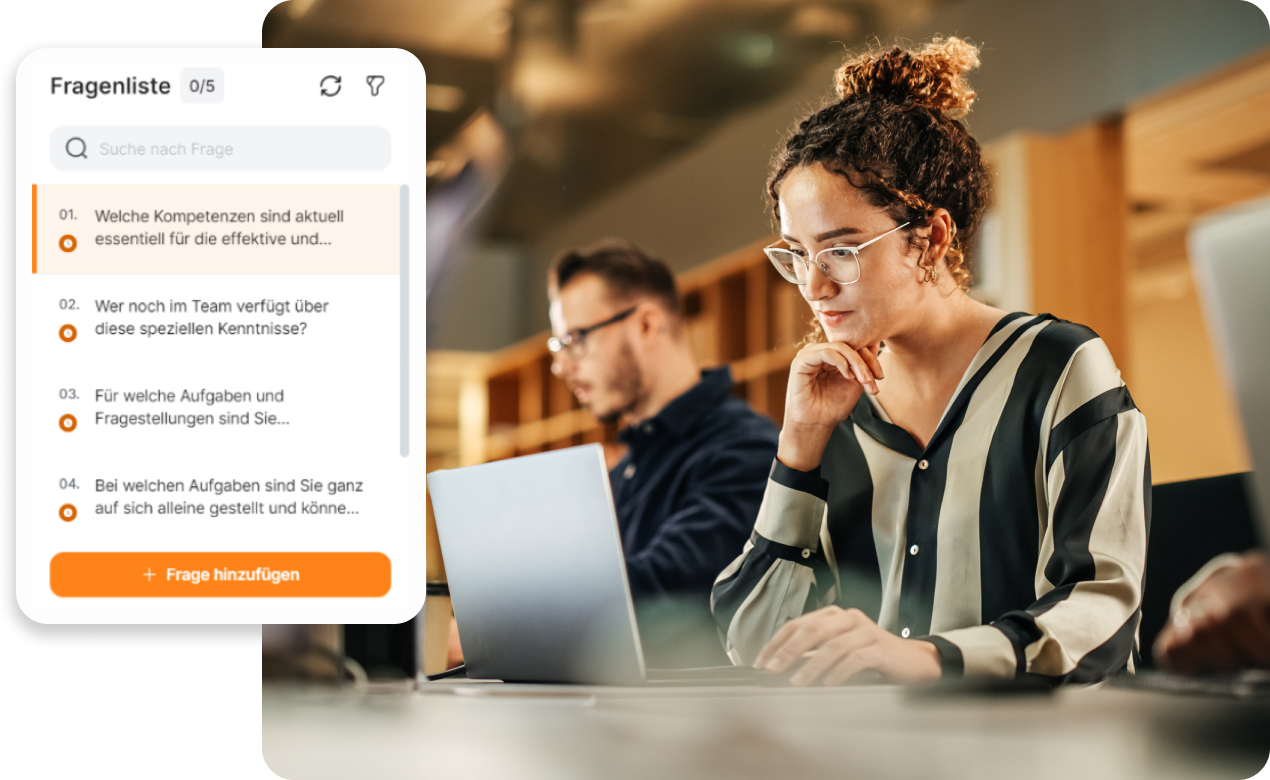
The Guided Onboarding Assistant combines the organisation’s collective memory with role-based knowledge twins and an AI-powered assistant. This makes onboarding structured, scalable and effective from day one.
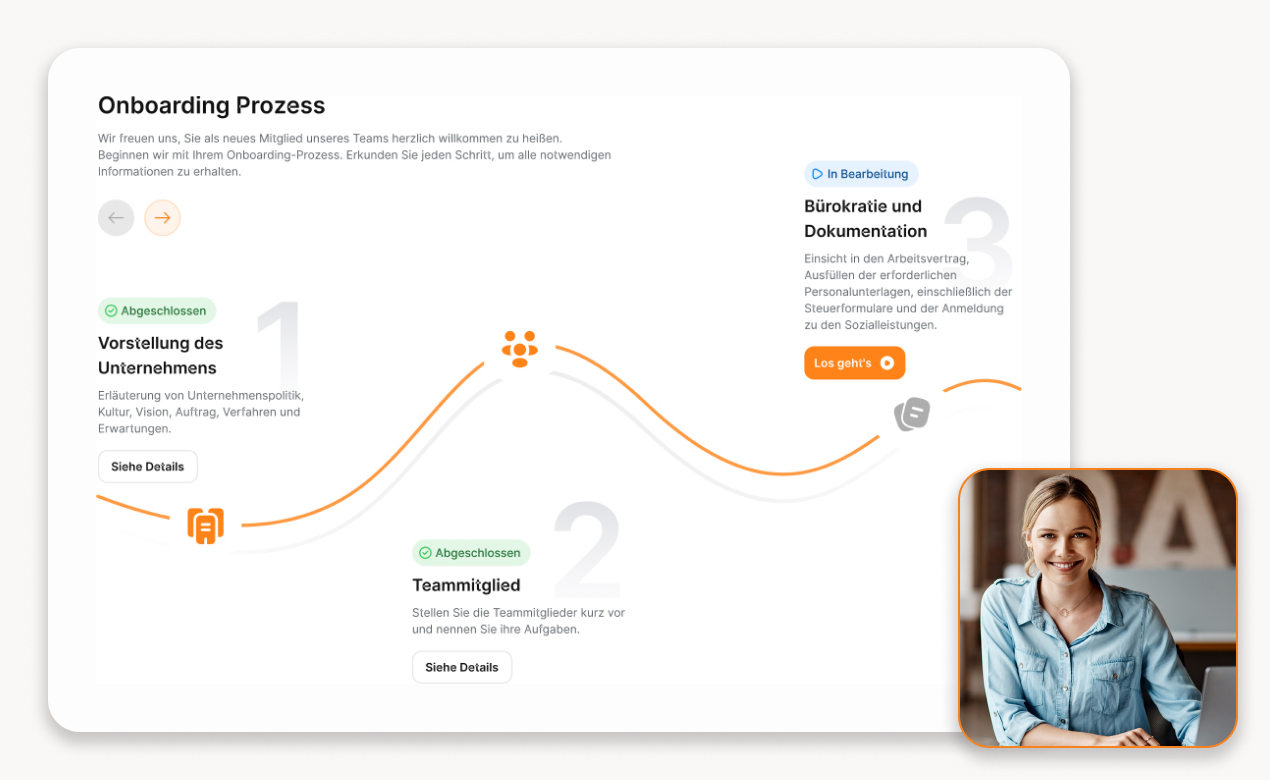
The system captures not only static documents, but also your team’s valuable practical knowledge: tried-and-tested solutions, operational best practices and common pitfalls that aren’t found in any manual. New employees receive exactly the information they need to get started.
A digital model of the role is created for each function – incorporating process knowledge, real-world workflows, responsibilities and quality standards drawn from your team’s practical experience. New employees can use this model as a guide, as it reflects the collective intelligence of the entire team.
When you’re unsure, the built-in assistant provides immediate, context-sensitive answers – just as if an experienced mentor were sitting right beside you, explaining each step of the task. When a new task arises, the system points you towards tried-and-tested solutions and the right people to contact.
Whilst the onboarding pilot supports employees as they take their first steps in their new role, the Personal Learning Assistant provides ongoing support. Learning thus evolves from a one-off phase into an integral part of their day-to-day work.
As soon as new tasks, process changes or errors arise, the system automatically identifies the need for learning – and immediately provides the relevant practical knowledge from the digital corporate memory.